The room you stopped using is about to become your favourite.
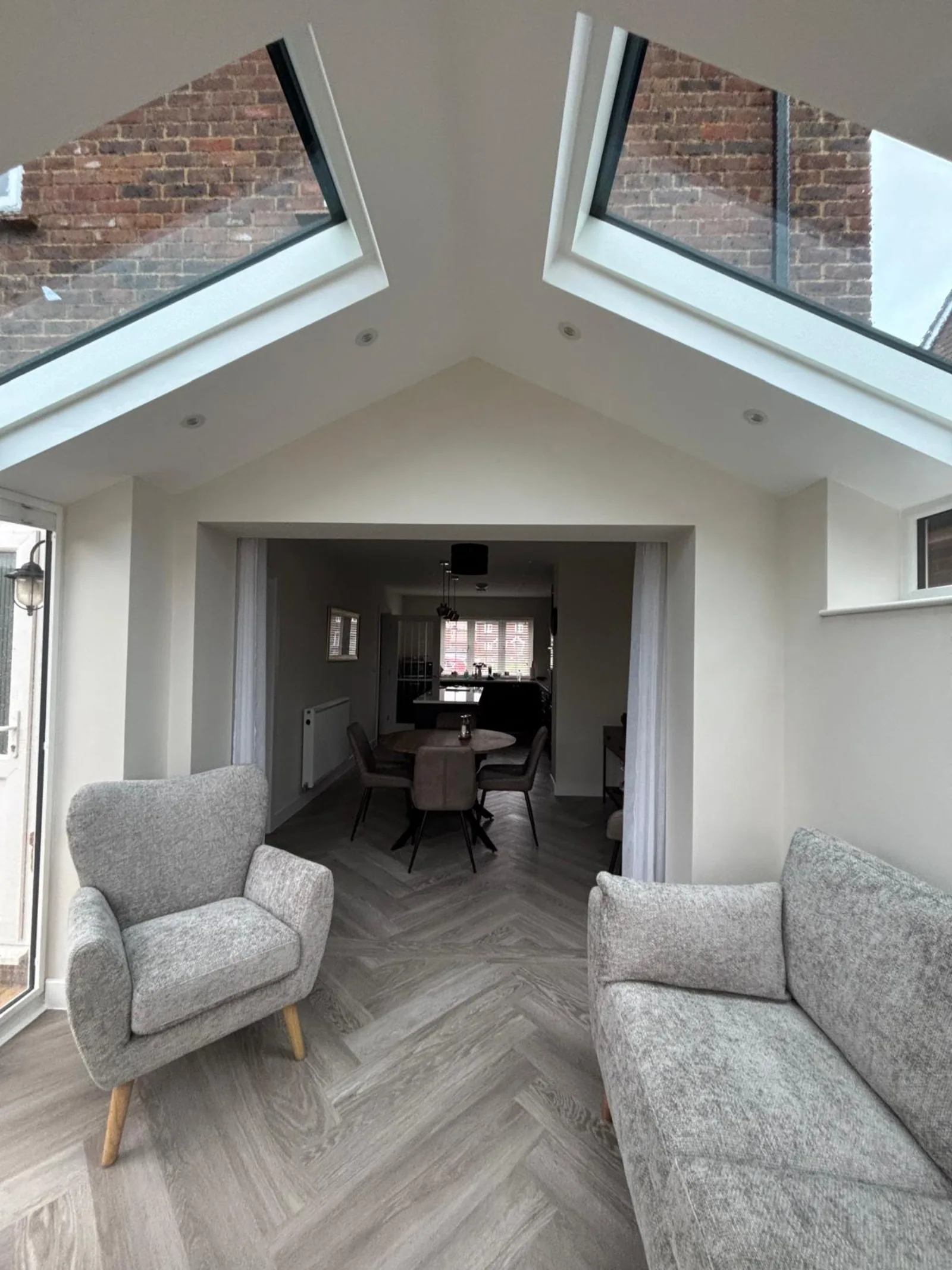
A tiled conservatory roof transforms an unusable conservatory into a year-round living space. Polycarbonate conservatory roofs typically range from a U-value of around 1.2 W/m²K (modern 35mm five-wall) to 2.7 W/m²K (16mm twin-wall, the common spec on 1990s and 2000s conservatories). The Supalite system achieves a U-value of 0.15 W/m²K — somewhere between an 8-fold and 18-fold reduction in heat loss depending on the roof being replaced. It also stops solar overheating in summer, eliminates rain noise, and reads as a vaulted plastered ceiling inside rather than a translucent panel.
Five things you’ll notice in the first week.
It stops cooking in summer
Polycarbonate roofs turn conservatories into greenhouses. A tiled roof with proper insulation kills the solar gain — you can sit in it on the hottest day of the year.
It holds heat in winter
U-value 0.15 W/m²K is better than the Building Regs minimum for a new-build extension roof. The room loses heat at roughly 1/8th to 1/18th the rate of a polycarbonate roof, depending on the existing spec — most clients can heat it from cold with the same energy a single radiator already used.
It quietens the rain
The drumming on a polycarbonate roof is the most-named complaint we hear on surveys. A layered tiled roof reduces that to almost nothing.
It cuts your bills
You stop trying to heat a leaky greenhouse. Most clients stop running portable AC in summer and measurably reduce the heat budget the home was haemorrhaging through the conservatory.
It adds value to the home
An insulated, Building Regulations-compliant room counts as habitable space. That helps at survey, at sale, and when you re-mortgage.
It lasts.
40+ year tile lifespan, 10-year insurance-backed guarantee, no recurring repaint or panel-swap costs. It’s a one-time job, done properly.
The single biggest change is how often the door stays open.
Most clients tell us the same thing about a month after handover: the room is just used. Working from it. Reading in it. Eating in it. Watching telly in it on a December evening with the rain hammering down outside, barely audible.
A tiled roof doesn’t add a room. It recovers one.
That’s the gap between a conservatory you walk past and one you walk into. The thermal performance is what makes it possible. Everything else — the decor, the lighting, the furniture — you’d already do, if only the room was worth furnishing in the first place.
Tiled vs polycarbonate vs glass vs new extension.
The four real options for an underperforming conservatory roof, side by side.
| Polycarbonate | Glass | Supalite Tiled | Full extension | |
|---|---|---|---|---|
| U-value | 1.2–2.7 W/m²K* | ~ 1.0 W/m²K | 0.15 W/m²K | ~ 0.18 W/m²K |
| Year-round usable | No | Marginal | Yes | Yes |
| Building Regulations compliant | n/a | n/a | Yes — LABC/LABSS approved | Yes |
| Reuses existing base & frame | Yes | Yes | Usually yes | No — rebuild |
| Typical install time | 3–5 days | 3–5 days | 5–10 days | 8–16 weeks |
| Rain noise | Loud | Moderate | Almost none | None |
| Indicative cost | £ | ££ | £££ | £££££ |
* Polycarbonate U-value spans modern 35mm five-wall (~1.2 W/m²K) at the low end to 16mm twin-wall (~2.7 W/m²K), the common spec on 1990s and 2000s conservatories. All figures indicative. Real numbers depend on conservatory size, existing structure and your spec. We’ll give you specifics on survey.
You’re not building a room. You’re unlocking one.
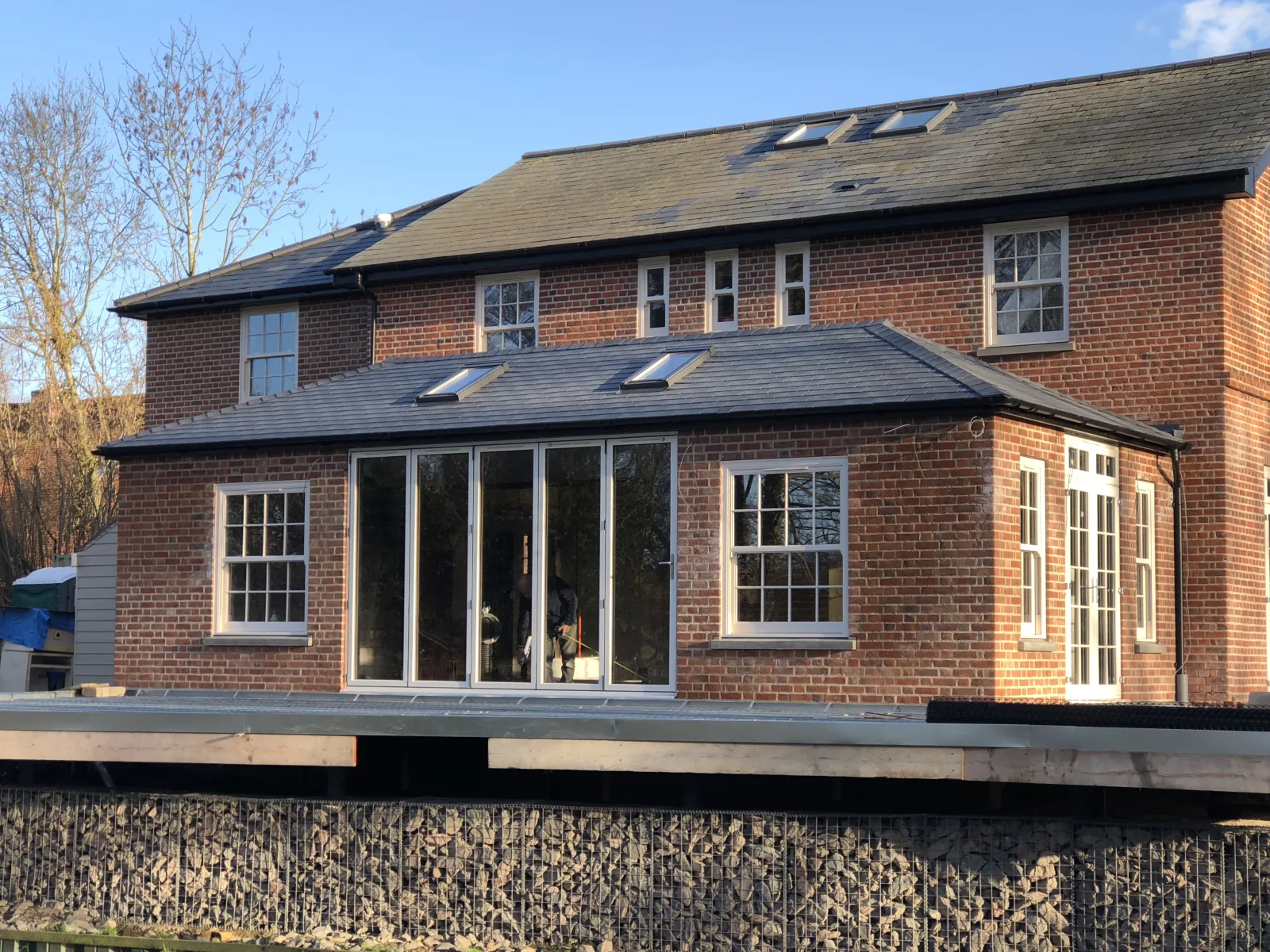
A full single-storey rear extension typically runs £35,000–£60,000 once you factor in foundations, walls, roof, glazing, plastering, decorating and a new floor — before VAT and any planning costs. A Supalite tiled roof transforms the room you already have for typically £8,000–£20,000 depending on conservatory size and specification — roughly a sixth to a third of the cost — in 5 to 10 days rather than 8 to 16 weeks, without losing any of the conservatory’s windows or doors.
For most homes, it’s the most cost-effective square-meter you’ll ever spend on a property — because you already paid for the floor space the first time round. You’re just making it count.
Get a quote for your conservatorySee what your conservatory could be.
Free home survey, fixed-price quote, no high-pressure sales. Decide in your own time.